In a poisoned mountain lake, a maimed newt and the frog sworn to let him die break an ancient law—proving that mercy can evolve.
Ancient Bloodlines is a 25,000-word eco-fantasy fable for young adult and adult readers, following Newton, a bullied rough-skinned newt left maimed after a heron strike, and Rana, a Columbia spotted frog who defies instinct and tradition by sparing him. In the stillness of Kingdom Lake, their forbidden act of care fractures the ancient divide between predator and prey—becoming the first sign that evolution may choose compassion over survival alone.
As pollution spreads and predators circle, their bond deepens—from enemy to ally, and then something more—challenging a world where violence is inherited and mercy is a betrayal. From the shaming circles of the newt herds to the fungal blight weakening Rana’s kin, and under the silent watch of their patron gods—Gorf, guardian of the frogs, and Twen, keeper of the newts—they are forced to confront not only bullies and betrayal, but the weight of myth itself. Joined by an ancient snapping turtle, they must prove that cooperation, not cruelty, can alter the course of their species’ future.
Grounded in ecological truth—amphibian decline, interspecies dependence, and the fragile balance of wetland ecosystems—the novella blends fable with environmental realism. For readers of Watership Down and Borne, Ancient Bloodlines delivers mythic creature empathy with urgency and intimacy, imagining a world where even the smallest lives carry memory, consequence, and the possibility of love.
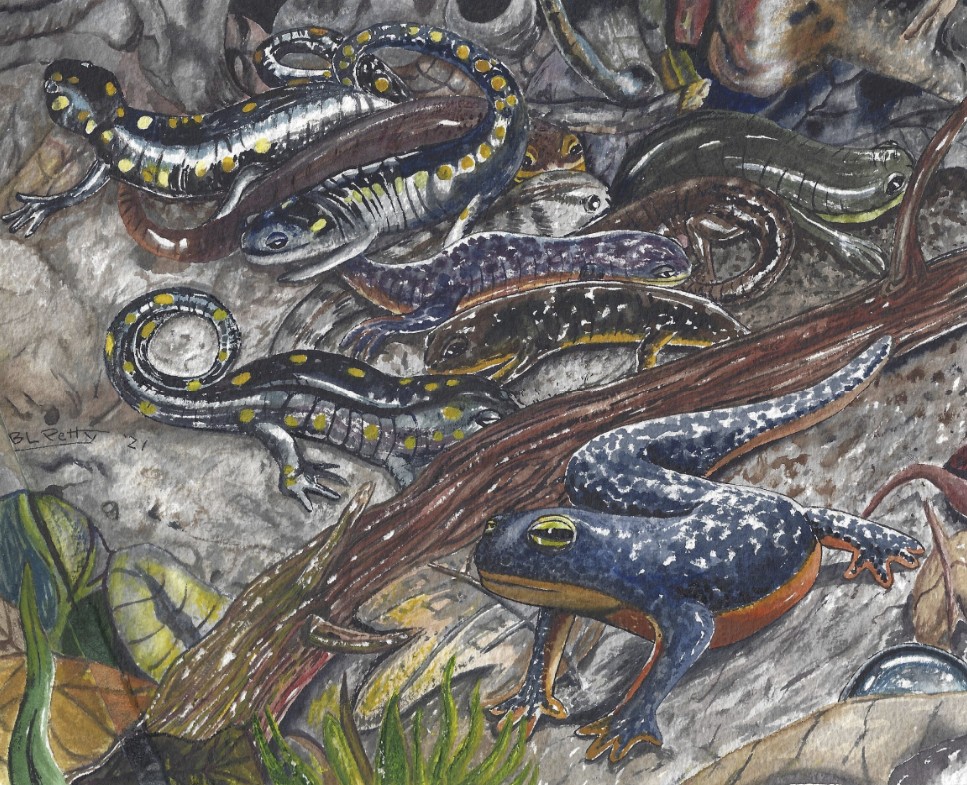
Amid the damp, tangled roots of the wild, salamanders and newts move through a world of concealment and ambush. Newton, a rough-skinned newt, crouches low in the foreground, his golden eyes darting between movement and shadow. Around him, spotted and striped salamanders coil and climb, their vibrant markings radiating warning from the mossy rocks. This is no sanctuary. It is a contest of instinct and deception, where survival belongs to those who stay unseen or strike first.
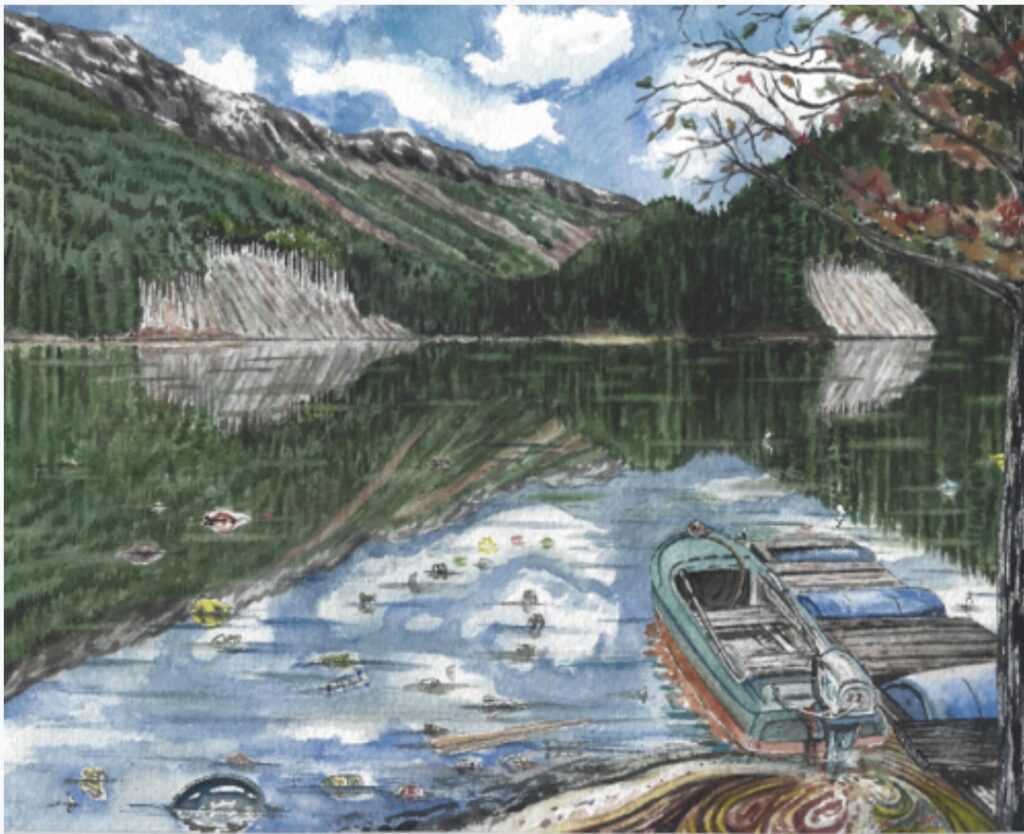
For more than a century, the giants have poisoned Kingdom Lake, their waste sinking into its depths, their debris piling along the shores. Oil glazes the water, plastic snags in the reeds, and the air carries the sting of rot. The lake’s creatures have always contended with predators, but this is something else—a creeping suffocation, a slow undoing. For the Columbia spotted frog—waterbound, with no path to higher ground—there is no retreat. The lake that once sustained them is turning against them, and soon, there will be nothing left to endure.
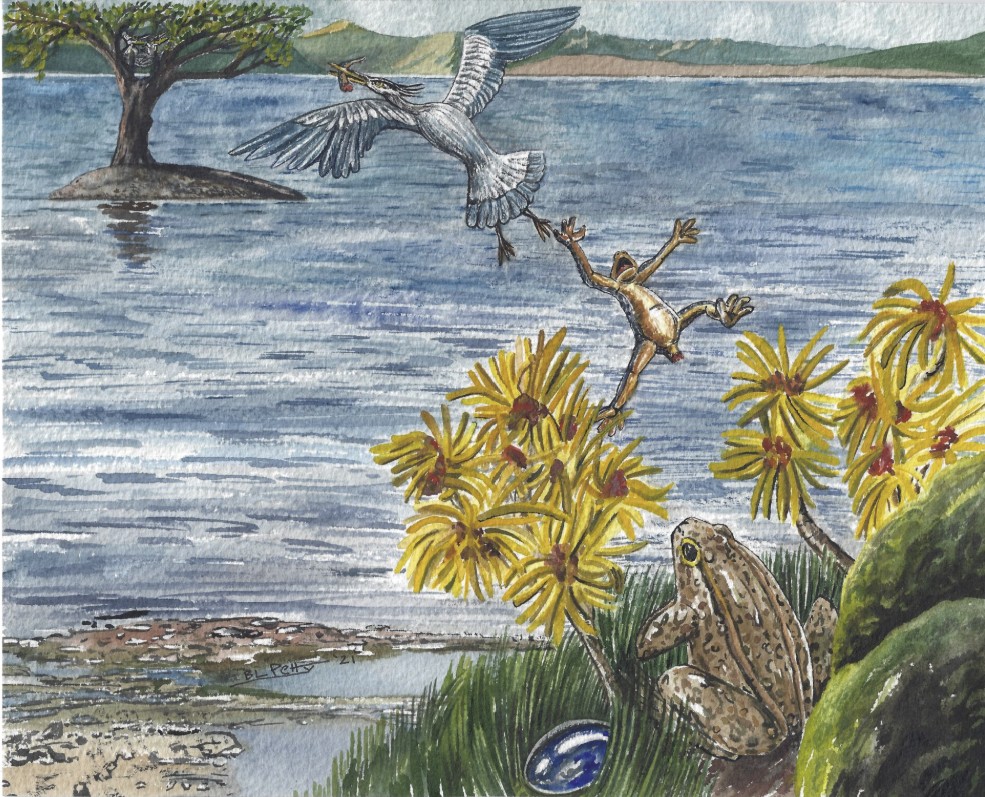
Rana, a Columbia spotted frog, watches from the shallows as a heron rips Newton, a rough-skinned newt, from the shoreline. His limbs thrash, but the bird’s grip is firm, dragging him skyward toward the open mouths of its young. Below, witch hazel blossoms quiver, unmoved by the struggle, their golden petals catching the light as if nothing has changed. But for Newton, everything has. The wild does not mourn, nor does it spare. It only takes.
EᴠØ-Myth™ Thread
• Interspecies Conscience of Care
• Epoch: Mythic allegory to modern day
• Axis: Survival instinct suppressed to care for a mortal enemy
• Creation’s lesson: When a creature resisted its own nature to preserve another’s life, creation proved it could evolve beyond blind survival. Instinct gave way to reflection, and the Universe took another step toward caring for itself. From that defiance, a higher-order ideal emerged: affection beyond one’s kind.